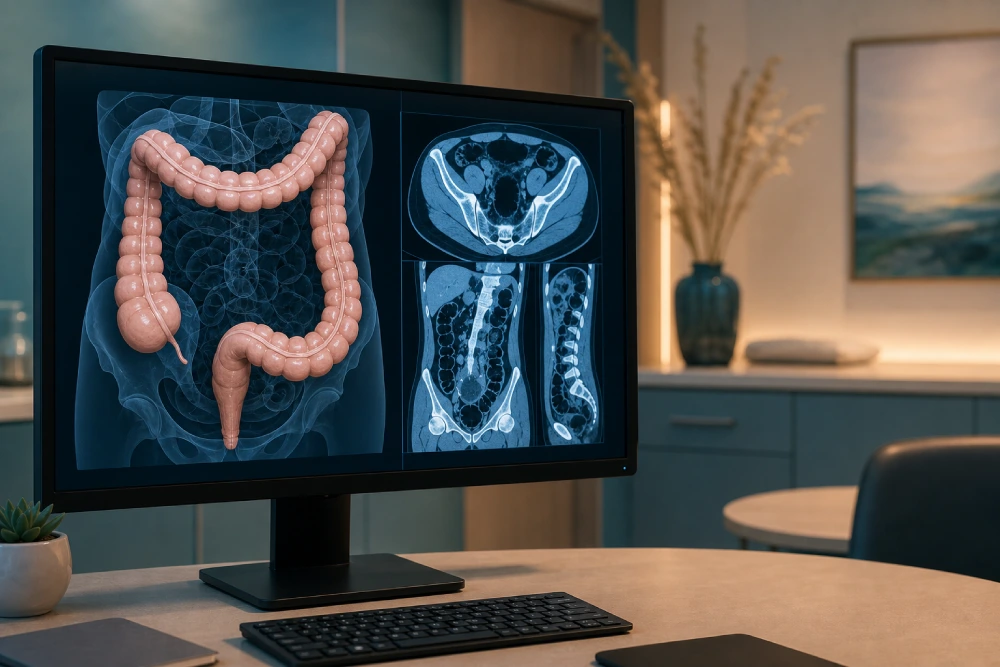
Colon cancer is bowel cancer that starts in the colon, the main part of the large bowel. Dr Ganesh Sivaji, consultant gastroenterologist in Harrogate, offers colon cancer diagnosis for people with bowel symptoms, a positive FIT result or a family history, using colonoscopy and other tests. He explains every result, and if cancer is found he refers you on to a specialist cancer team.
What Is Colon Cancer?
Bowel cancer is cancer anywhere in the large bowel, which includes the colon and the rectum. Cancer that begins in the colon and cancer in the rectum (rectal cancer) cause similar symptoms. Bowel cancer is one of the most common cancers in the UK.
It usually develops from polyps, small growths on the bowel lining, which is why finding and removing colon polyps matters. How serious a cancer is depends on its size, whether it has spread and your general health.
Colon Cancer Symptoms That Need Urgent Attention
| Symptom | Where to go |
|---|---|
| Non-stop bleeding from your bottom, or heavy bleeding with large clots when you poo | Call 999 or go to A&E; do not drive yourself |
| Cramping tummy pain with bloating, being sick and being unable to poo or pass wind (a possible blocked bowel) | Go to A&E |
| Poo that looks black or dark red, or bloody diarrhoea | Urgent GP appointment, or NHS 111 online or by phone |
| Changes in your poo or how often you go, blood in your poo, a tummy lump, bloating, weight loss, or tiredness and breathlessness from anaemia | Book a GP appointment or a consultation with Dr Sivaji |
These symptoms are common and usually have another cause, such as piles, but they still need checking. The NHS list of bowel cancer symptoms has more detail, and Dr Sivaji’s articles on symptoms in men and early signs in women go further.
Bowel Problems Dr Sivaji Investigates
An assessment with Dr Sivaji may suit you if you have:
- New or lasting bowel changes: bleeding, looser poo, constipation or going more often.
- A positive FIT result: from NHS screening or a GP test.
- Iron-deficiency anaemia: tiredness or breathlessness with low iron on a blood test.
- A family history: a close relative with bowel cancer, or an inherited condition such as Lynch syndrome or FAP.
- Polyps in the past: found at an earlier colonoscopy.
- Long-standing inflammatory bowel disease: ulcerative colitis or Crohn’s disease raises the risk.
- Unexplained weight loss with tummy pain.
Being over 50, smoking and being overweight also raise the risk. Eating plenty of fruit and vegetables, staying active, drinking less alcohol and eating less red and processed meat can lower it.
Options for Testing: FIT, Colonoscopy and Scans
The right test depends on your symptoms, age and health. Dr Sivaji explains each one and agrees the plan with you, including when a test is not needed yet.
Home FIT Kit
Looks for traces of blood in a poo sample. NICE advises a suspected cancer referral when the result is at least 10 micrograms of haemoglobin per gram of poo. A normal result does not rule cancer out if symptoms continue.
Camera Test of the Whole Bowel
Colonoscopy is the main test for bowel cancer. Dr Sivaji views the whole large bowel, takes biopsies of anything abnormal and removes polyps; preparation and recovery are on the private colonoscopy page.
Lower-Bowel Camera Test
A flexible sigmoidoscopy examines only the rectum and the lower part of the large bowel, so it suits symptoms that point low down.
CT Scans
CT colonography builds pictures of the bowel after bowel preparation. A CT scan of the tummy and pelvis is an option for people who cannot take bowel preparation.
Blood Tests
These check for anaemia, iron levels and how your liver and kidneys are working. They support the picture, but the diagnosis itself comes from a biopsy.
Why Patients Choose Dr Sivaji to Investigate Bowel Symptoms
- One consultant throughout: he takes your history, performs the colonoscopy and explains the results himself.
- Biopsies from the same test: if anything looks abnormal, samples go straight to the laboratory.
- A clear route onwards: if cancer is confirmed, he explains what has been found and refers you for treatment planning.
- NHS experience: appointed consultant gastroenterologist in Harrogate’s NHS trust in 2010, with MRCP (UK) and FRCP.
- Time to listen: a patient once told him the hardest part was not understanding the diagnosis, and his consultations are built around that.
Read more about Dr Sivaji and his training.
What Happens at Your Colon Cancer Diagnosis Appointment
- Booking: request a time online; no GP letter is needed.
- Consultation (about 30 minutes): your symptoms, bowel habit, general health, medicines and family history.
- Examination: a tummy examination and, if needed, a rectal examination, with a chaperone if you would like one.
- Tests: usually a colonoscopy, which can often be booked straight after the consultation, with blood tests if needed.
- Results: colonoscopy findings are explained before you leave, with a written report; biopsy results follow later.
Each test comes with its benefits, risks and alternatives explained, including waiting or not testing, so the decision stays with you.
If Cancer Is Found: Colon Cancer Treatment and Next Steps
Dr Sivaji does not treat bowel cancer himself. If a biopsy confirms cancer, he explains exactly what has been found and refers you to a specialist colorectal cancer team, who aim to see you as soon as possible.
You may need more tests, such as CT, MRI or PET scans, blood tests and genetic tests, to show whether the cancer has spread. The cancer team then plans treatment, which may include surgery, chemotherapy, radiotherapy or targeted medicines, depending on the size and position of the cancer and your general health.
A clinical nurse specialist in that team becomes your main point of contact. Macmillan Cancer Support, Cancer Research UK and Bowel Cancer UK also offer support, and his article on treatment options and outlook answers common questions.
Bowel Check Locations in Harrogate
Dr Sivaji’s bowel clinics run from two Harrogate sites. Colonoscopies take place in a hospital endoscopy unit, confirmed when your test is booked.
| Site | Address |
|---|---|
| The Duchy Hospital | Queen’s Road, Harrogate HG2 0HF (Circle Health Group) |
| Harrogate Harlow | Harrogate |
Morning or evening clinic times are agreed when you book. Outside them, call NHS 111 for urgent advice, or 999 in an emergency.
Private or NHS Bowel Cancer Testing?
On the NHS, everyone aged 50 to 74 who is registered with a GP receives a FIT kit by post every 2 years, and blood in the sample leads to a specialist nurse appointment and usually a colonoscopy. If you have symptoms, your GP can refer you urgently. Privately, you can refer yourself to Dr Sivaji, who also works as an NHS consultant in Harrogate. Screening is your choice either way, and a clear screening result is not a reason to ignore new symptoms.
Fees and Insurance for Colon Cancer Testing
What you pay depends on which tests you need. 2026 prices for the consultation and each test are confirmed in writing before you commit.
| Service | How it is quoted |
|---|---|
| Consultation | At booking |
| Blood tests | Before they are arranged |
| Colonoscopy with biopsies | Before the procedure |
- Private medical insurance: BUPA, AXA, Vitality and Aviva are accepted, as are most other major insurers; confirm your cover and authorisation before any test.
- Paying yourself: no insurance is needed, and you will know the total before your appointment.
FAQs About Colon Cancer Diagnosis
Is there a colon cancer blood test?
No blood test confirms bowel cancer on its own. Blood tests check for anaemia and your general health, and a FIT poo test looks for hidden blood, but the diagnosis comes from a biopsy taken at colonoscopy.
Are colon cancer symptoms constant or intermittent?
Symptoms do not have to be there all the time to matter. NHS advice is to see a GP about any bowel cancer symptom, and to get mucus or blood in your poo checked if it has lasted 3 weeks or more.
What are the early signs of bowel cancer?
A change in bowel habit, blood in your poo, tummy pain or tiredness from anaemia are among the commonest. Screening exists because it can find cancer before any symptoms appear.
Which test is right for me?
It depends on your symptoms, age and risk. FIT checks for hidden blood; colonoscopy is the main test when symptoms or a positive FIT need investigating. His article on which screening test is best compares the options.
Is colon cancer the same as bowel cancer?
It is one type of bowel cancer. Bowel cancer, also called colorectal cancer, covers both the colon and the rectum. Cancers of the anus and small bowel are different conditions.
Who can have NHS bowel cancer screening?
People aged 50 to 74 who are registered with a GP get a screening kit through the post every 2 years. From 75, you can ask the NHS bowel cancer screening helpline for a kit every 2 years.
Does a family history raise my risk?
Yes. A close relative with bowel cancer makes it more likely, and inherited conditions such as Lynch syndrome and FAP raise the risk further. Some people at higher risk are checked earlier than the national programme.
Can I see Dr Sivaji without a GP referral?
Yes. You can book a consultation directly, and he can keep your GP informed. Seeing your GP is also a good route, as the NHS can refer urgently if cancer is suspected.
When will my biopsy results be ready?
It varies with the laboratory and the tests needed. Dr Sivaji tells you when to expect your results and how you will receive them; contact the practice if you have not heard by then.
What happens if cancer is found?
Dr Sivaji explains the findings and refers you to a colorectal cancer team. Further scans show whether it has spread, the team plans treatment with you, and a specialist nurse becomes your main contact.
Book a Consultation with Dr Ganesh Sivaji About Bowel Symptoms
If your bowel habit has changed or a FIT result has come back positive, Dr Sivaji can see you and plan the right test.
- Book online: Book a Consultation; the practice team then gets in touch to agree a time.
- Prefer to ask first? Use the contact form.
Heavy bleeding that does not stop, or signs of a blocked bowel, need 999 or A&E straight away. NHS 111 can help out of hours.
At a glance
Which symptoms should I act on?
Blood in your poo, a change in bowel habit, tummy pain, weight loss or unusual tiredness
Which tests are used?
A FIT poo test, colonoscopy and sometimes CT colonography
What does NHS screening offer?
A postal poo test every 2 years, ages 50 to 74
Who carries out the colonoscopy?
Dr Sivaji himself
What if cancer is found?
Referral to a specialist colorectal cancer team for treatment
Can I book without my GP?
Yes, directly
Book this treatment
Same-week appointments available. Our coordinator confirms within 2 hours.