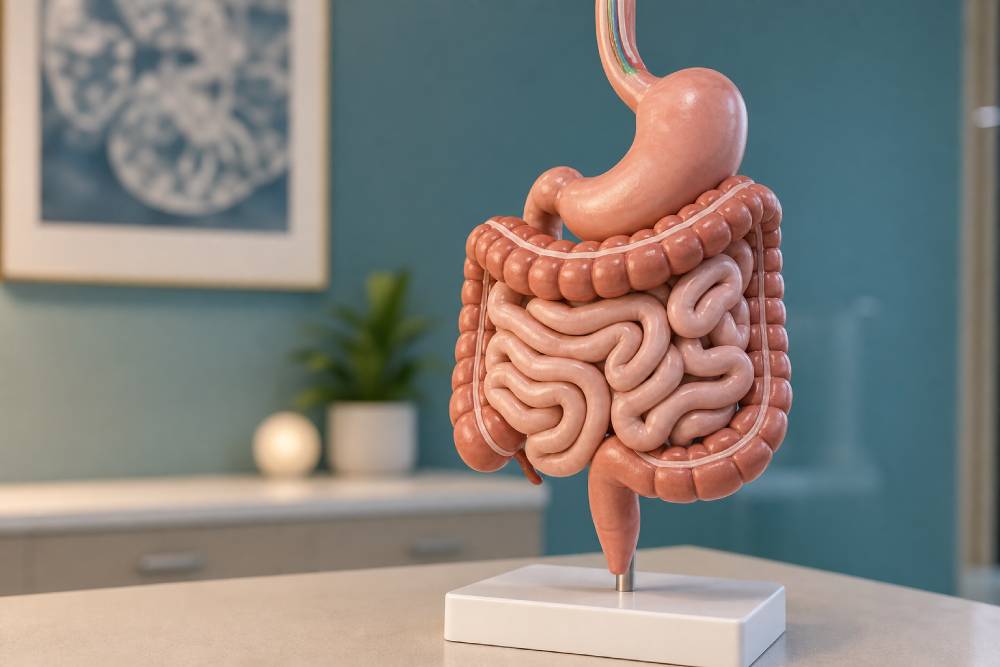
Irritable bowel syndrome (IBS) is a common, long-term gut condition that causes tummy pain, bloating, diarrhoea or constipation. Dr Ganesh Sivaji, a Consultant Gastroenterologist in Harrogate, first checks that your symptoms fit IBS and rules out problems such as coeliac disease and inflammatory bowel disease. Irritable bowel syndrome treatment then follows a clear plan covering diet, medicines and, if needed, talking therapies.
What Is Irritable Bowel Syndrome?
IBS is a common condition of the digestive system. It causes cramps, bloating and changes in bowel habit that tend to come and go, sometimes lasting days, weeks or months at a time. For most people it is a lifelong problem with a real effect on everyday life.
There is no single test that proves IBS. The diagnosis rests on your pattern of symptoms once other conditions have been ruled out. Dr Sivaji’s work centres on luminal gastroenterology, the medical care of the gullet, stomach and bowel, and he also treats the conditions that can mimic IBS, which helps him judge which tests are worth doing.
IBS or Something Else? Symptoms That Need Urgent Checks
Some symptoms are not typical of IBS and could point to something more serious, so get them checked.
| What you notice | What to do |
|---|---|
| Bleeding from your bottom that will not stop, or a lot of blood or large clots in the toilet | Dial 999 or go to A&E |
| Severe tummy pain, or vomiting blood or poo, or sick that looks like coffee grounds | Dial 999 or go to A&E |
| Bloody diarrhoea, or bleeding from your bottom | Urgent GP appointment or NHS 111 |
| Losing a lot of weight for no reason, or a hard lump or swelling in your tummy | Urgent GP appointment or NHS 111 |
| Breathlessness, a pounding heartbeat and paler skin than usual | Urgent GP appointment or NHS 111 |
| Possible IBS symptoms for more than 4 weeks | See your GP, or book a specialist review |
The NHS guide to IBS symptoms lists the same warning signs. If you need A&E, ask someone to drive you or call an ambulance. NICE advises that a new warning sign during follow-up should prompt further tests.
Gut Symptoms Dr Sivaji Treats as Part of IBS Care
Your main symptoms shape the plan. Dr Sivaji sees people with:
- Tummy pain or cramps: usually worse after eating and better after opening your bowels.
- Bloating: a tummy that feels uncomfortably full and swollen.
- IBS with diarrhoea: watery poo and sometimes a sudden need to go.
- IBS with constipation: straining and a feeling that you cannot empty your bowels; read more about IBS without diarrhoea.
- A changing pattern: spells of diarrhoea and constipation that alternate unpredictably.
- Other symptoms: wind, mucus, tiredness, nausea, backache, and bladder or pelvic symptoms.
His blog posts look at the main symptoms of IBS and the three most common IBS symptoms in more detail.
IBS or inflammatory bowel disease? They are different conditions: in inflammatory bowel disease (IBD) the immune system attacks and inflames the bowel. Crohn’s disease can occur anywhere along the gut, while ulcerative colitis affects the rectum and colon. Dr Sivaji checks for both first. Read what inflammatory bowel disease is and how IBS and ulcerative colitis compare on his blog.
Common Irritable Bowel Syndrome Causes and Triggers
Nobody yet knows exactly what causes IBS. The NHS links it to food passing through the gut too quickly or too slowly, a past bout of gastroenteritis, an oversensitive gut, stress and a family history of IBS.
The British Society of Gastroenterology now classes IBS as a disorder of gut–brain interaction rather than a purely functional bowel problem. Stress and anxiety are recognised triggers, which fits with that link between the bowel and the nervous system.
Flare-ups can come for no obvious reason, but alcohol, caffeine, spicy or fatty food, stress and regular antibiotic use are common triggers. A diary of what you eat and how you feel, as the NHS suggests, helps you spot your own and gives Dr Sivaji useful detail.
Irritable Bowel Syndrome Treatment Options
No single diet or medicine works for everyone with IBS, so treatment is built up in steps and reviewed. Not every step is needed, and some people manage well with advice alone.
Diet and Lifestyle Changes
Regular meals eaten slowly, 8 to 10 drinks of fluid a day, no more than 3 portions of fresh fruit and 3 caffeinated drinks a day, and regular exercise. NICE advises cutting down on insoluble fibre such as bran; oats ease bloating and help constipation. Probiotics are worth trying for at least 4 weeks.
Specialist Diet Advice, Including Low FODMAP
If symptoms continue, NICE recommends further diet changes such as a low FODMAP diet, which limits certain fermentable carbohydrates. It should be guided by someone trained in dietary management, so Dr Sivaji may refer you to a dietitian.
Medicines
Antispasmodics ease cramps, laxatives help constipation and antimotility medicines slow diarrhoea. If these do not help, NICE suggests a low dose of a tricyclic antidepressant at night, used for gut pain rather than mood, reviewed after 4 weeks.
Talking Therapies for Persistent IBS
For IBS that has not settled after 12 months of medicines, NICE suggests considering cognitive behavioural therapy (CBT), hypnotherapy or another psychological therapy. Dr Sivaji can talk through whether a referral would suit you.
Watchful Waiting
If symptoms are mild and tests reassuring, keeping your diary going and changing nothing for now is a reasonable choice.
Why Patients Choose Dr Sivaji for IBS Care
- He listens before he tests: your history, not a checklist, decides whether any test is needed.
- Plain-language answers: you leave knowing what IBS is and what to try first.
- The same consultant at follow-up: usually 6 to 8 weeks after your first visit, then as needed.
- Look-alike conditions covered: he also treats coeliac disease and IBD, and performs colonoscopy himself.
- Self-referral welcome: no GP letter needed; he can update your GP if you wish.
Qualifications and memberships:
- MBBS (1995), MRCP (UK) (2002), FRCP (2015).
- Full Member of the British Society of Gastroenterology; GMC Specialist Register; European Society of Gastrointestinal Endoscopy.
Read more about Dr Sivaji’s training.
Meet Dr Sivaji
Dr Ganesh Sivaji trained in medicine in India for eight years before moving to the UK in 1998. He completed specialist gastroenterology training in Yorkshire and has been a Consultant Gastroenterologist at Harrogate and District NHS Foundation Trust since 2010. Early on, a patient told him the most frightening part of being ill was not understanding the diagnosis, and he still shapes each consultation around that: time to listen, results in plain words, a plan you can follow.
What Happens at Your First IBS Appointment
- Your story: a 30-minute consultation about your symptoms, diet, stress, sleep and medicines.
- Examination: usually a check of your tummy for tenderness, lumps or swelling.
- Tests to rule out other causes: NICE recommends a full blood count, inflammation tests and a coeliac antibody test; a poo sample checks for infection and IBD.
- Camera tests only when they add something: with warning signs, Dr Sivaji may suggest a private colonoscopy.
- Your plan: what to try first, what to watch for and when he will see you again.
Before any test or treatment, he explains the benefits, risks and alternatives, including doing nothing for now. Bring photo ID, your insurance details, recent test results or letters and a list of your medicines.
Where Dr Sivaji Sees Patients With IBS
IBS consultations take place in Harrogate, at two locations.
| Clinic | Address | Good to know |
|---|---|---|
| The Duchy Hospital | Queen’s Road, Harrogate HG2 0HF | Part of Circle Health Group |
| Harrogate Harlow | Harrogate | Ask which site suits you when booking |
He holds evening and morning clinics; the practice confirms your time and place. Out of hours, NHS 111 gives urgent advice and 999 is for emergencies.
IBS Consultation Fees and Insurance
You can pay for yourself or use private health insurance. Your 2026 consultation fee is confirmed in writing before you book.
| Part of your care | How the fee is set |
|---|---|
| First consultation (30 minutes) | Confirmed in writing when you book |
| Follow-up reviews | Quoted when each one is arranged |
| Blood tests, poo tests or a colonoscopy | Explained and priced before they go ahead |
- Insured: BUPA, AXA, Vitality, Aviva and most other major insurers. Check your policy and get pre-authorisation; the practice helps with claims where it can.
- Self-pay: welcome, and you will know the full fee before you attend.
FAQs About Irritable Bowel Syndrome
What does irritable bowel syndrome mean?
It names a long-term pattern of tummy pain or discomfort linked to bowel habit, with symptoms such as bloating, straining, urgency or mucus. NICE uses this pattern to diagnose IBS once other conditions are excluded.
What are the common irritable bowel syndrome causes?
No one cause explains it. How fast food moves through the gut, an earlier stomach infection, a sensitive bowel, stress and family history all seem to play a part.
How is IBS diagnosed?
From your symptoms, an examination and a few tests that exclude other conditions: blood tests for anaemia, inflammation and coeliac disease, plus a poo sample.
Do I need a colonoscopy for IBS?
Not usually. NICE does not recommend colonoscopy simply to confirm IBS when the symptoms fit and nothing worrying is found. Dr Sivaji may advise one if you have bleeding, weight loss, raised inflammation markers or other concerns.
Is IBS the same as inflammatory bowel disease?
No. Inflammatory bowel disease, which includes Crohn’s disease and ulcerative colitis, inflames the bowel and needs different medicines. Some symptoms overlap, and blood and poo tests help tell them apart.
Can I have IBS without diarrhoea?
Yes. Some people mainly have constipation, with straining, bloating and pain. Treatment then leans on fluids, soluble fibre such as oats and, if needed, laxatives adjusted to how your bowels respond.
Which foods make IBS worse?
It differs between people, but common culprits are fatty, spicy or processed foods, alcohol, fizzy drinks, caffeine and the sweetener sorbitol. Cabbage, beans and onions can add to wind and bloating.
Which medicines help IBS?
Antispasmodics or peppermint oil for cramps, laxatives for constipation and antimotility medicines for diarrhoea come first. A low-dose antidepressant, taken for gut pain, is a second-line option.
Can stress make IBS worse?
Yes. The NHS lists stress and anxiety as flare-up triggers. Relaxation and exercise can help, and CBT or hypnotherapy are options when symptoms carry on despite treatment.
Will IBS ever go away?
IBS is usually lifelong, with symptoms that come and go. The NHS notes that diet changes and medicines can often control them, and Dr Sivaji reviews your plan until you have a routine that works.
Book a Consultation with Dr Ganesh Sivaji About IBS
If IBS is getting in the way of work, meals or sleep, a consultation is a sensible next step.
- Online: Book a Consultation and the team will contact you to arrange a time.
- Questions first: send a message through the contact form.
- For someone else: you can book on behalf of a family member.
This page is general information, not personal medical advice. If you have heavy bleeding or severe tummy pain, call 999 or go to A&E; for urgent advice when the practice is closed, call NHS 111.
At a glance
Main symptoms
Cramps, bloating, diarrhoea or constipation, often worse after eating
How IBS is confirmed
Your symptom pattern plus simple blood and poo tests that exclude other conditions
First steps
Changes to meals, fibre and drinks, with pharmacy or prescribed medicines
If symptoms persist
Dietitian-led diets, low-dose gut pain medicines or psychological therapy
Signs that need urgent checks
Bleeding from the bottom, weight loss without trying, a lump in the tummy
First appointment
30 minutes with Dr Sivaji, no GP referral needed
Book this treatment
Same-week appointments available. Our coordinator confirms within 2 hours.