Overview
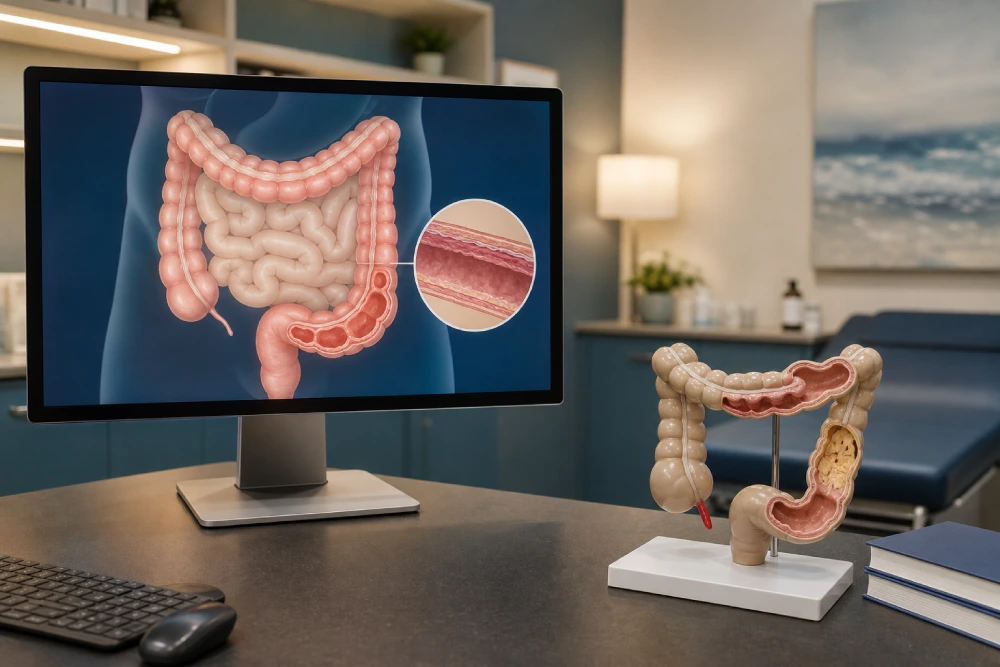
Crohn’s disease causes inflammation throughout the digestive tract. Symptoms vary: abdominal pain, diarrhoea, weight loss, fatigue. Impact on quality of life can be significant.
Proper diagnosis requires endoscopy, imaging, and blood tests. Once confirmed, Dr Sivaji develops a long-term strategy combining medication, dietary management, and regular monitoring to achieve remission and prevent flares.
What to Expect
01
Thorough Investigation
Detailed symptom history guides investigation. Endoscopy shows inflammation pattern and location. Imaging (CT or MRI) assesses full bowel extent. Blood tests check for inflammation markers and complications.
02
Diagnosis & Discussion
Once Crohn’s is confirmed, Dr Sivaji explains exactly what’s happening, where inflammation is, and what this means for treatment. Your questions answered fully. You understand your disease.
03
Long-Term Management Plan
Treatment options discussed—medication choices (5-ASA drugs, immunosuppressants, biologics), dietary modifications, lifestyle adjustments. Regular follow-up appointments monitor response, adjust treatment, manage complications.
Key benefits
- Expert diagnosis prevents misdiagnosis delay
- Multiple medication options available
- Endoscopic monitoring of treatment response
- Dietary guidance improves symptoms
- Remission achievable with proper treatment
- Long-term support prevents complications
At a glance
Diagnosis process
Endoscopy, imaging, blood tests
Initial consultation
30 minutes
Medication options
Multiple evidence-based choices
Follow-up
Regular monitoring (typically 6-12 weeks)
Goal
Remission and quality of life improvement
Book this treatment
Same-week appointments available. Our coordinator confirms within 2 hours.