Overview
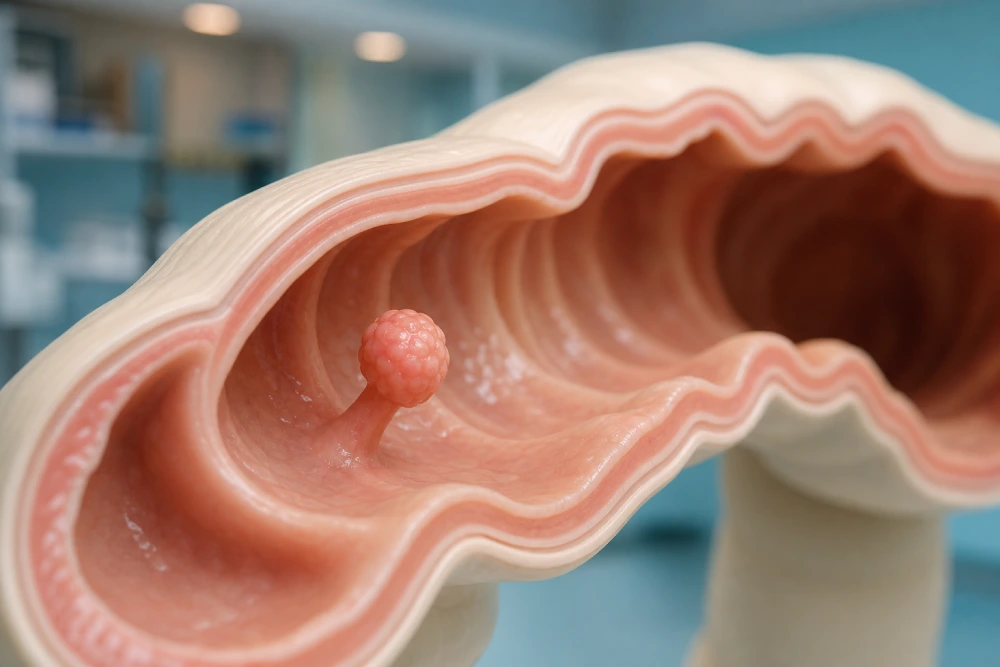
Polyps are common. The good news: most are benign and removable before they become problematic. Endoscopy allows Dr Sivaji to evaluate polyps—determine type, size, and risk—then remove them safely.
Removal during colonoscopy prevents cancer. Follow-up surveillance schedule depends on polyp type and number. The goal: cancer prevention through proactive management.
What to Expect
01
Evaluation
During colonoscopy, polyps are identified and assessed—size, appearance, location, and type determined. Dr Sivaji uses specialized techniques (narrow-band imaging, magnification) to assess cancer risk.
02
Removal
Benign polyps are removed using specialized tools during colonoscopy. Removed tissue sent to pathology for analysis. Results typically available 5-7 working days.
03
Surveillance Planning
Based on polyp type, size, and number, Dr Sivaji establishes surveillance schedule. Some polyps require follow-up in 1-2 years, others in 5-10 years. Clear plan provided so you know exactly when to return.
Key benefits
- Cancer prevention through removal
- Accurate polyp evaluation (type and risk)
- Removal during same procedure
- Clear surveillance schedule
- Minimizes need for future investigation
- Significantly reduces cancer risk
At a glance
What they are
growths in the bowel lining, usually benign
Risk level
Varies by type and size
Detection
Colonoscopy
Removal
During colonoscopy (polypectomy)
Surveillance
Scheduled follow-up based on findings
Book this treatment
Same-week appointments available. Our coordinator confirms within 2 hours.